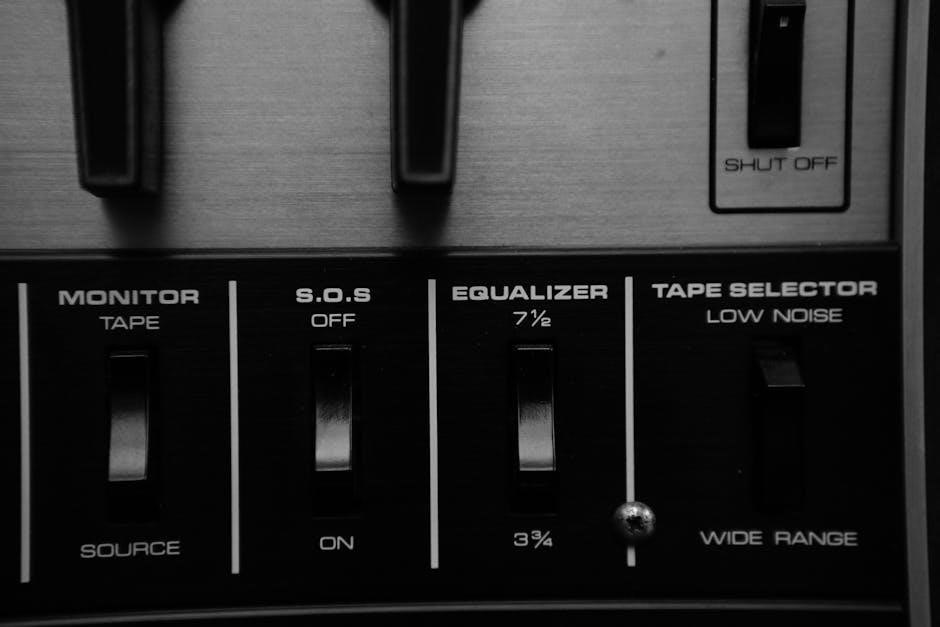
owners manual for radio shack scanner
- Published
- in Manuals
Radio Shack scanners‚ detailed in numerous owners manuals‚ offered accessible monitoring of various frequencies. These guides‚ like those for the PRO-94 and PRO-2015‚ simplify programming and operation.
What are Radio Shack Scanners?
Radio Shack scanners‚ extensively covered in owners manuals like the PRO-94’s‚ are radio receivers capable of tuning into and decoding various radio frequencies. These devices‚ including models PRO-79‚ PRO-2015‚ and 20-163‚ allow users to listen to public safety‚ aviation‚ and other radio communications. Manuals detail features and programming‚ enabling effective scanning.
Brief History of Radio Shack Scanners
Radio Shack entered the scanner market offering affordable options‚ supported by detailed owners manuals for models like the PRO-94 and PRO-79. These scanners gained popularity for monitoring public safety and aviation. Manuals evolved alongside technology‚ guiding users through increasingly complex features like trunking‚ ensuring accessibility for hobbyists and professionals alike.

Understanding Your Scanner Model
Owners manuals are crucial for navigating specific Radio Shack scanner features‚ such as the PRO-94‚ PRO-79‚ or PRO-2015‚ unlocking their full potential.
Identifying Your Specific Radio Shack Scanner (PRO-94‚ PRO-79‚ PRO-2015‚ 20-163‚ PRO-95)
Owners manuals‚ readily available online via ManualsLib and the Internet Archive‚ are essential for correct identification. Knowing your model – whether a PRO-94‚ PRO-79‚ PRO-2015‚ 20-163‚ or PRO-95 – dictates the appropriate programming procedures and feature access. Referencing the correct manual ensures optimal scanner performance and avoids confusion during setup.
Key Features and Capabilities
Owners manuals detail each scanner’s unique strengths. Models like the PRO-94 offer trunking capabilities‚ while others excel in conventional frequency monitoring. Manuals explain features like CTCSS/DCS decoding‚ VFO operation‚ and memory management. Understanding these capabilities‚ as outlined in the documentation‚ unlocks the full potential of your Radio Shack scanner.
Basic Operations
Owners manuals guide users through powering on/off‚ setting the squelch‚ and adjusting volume – fundamental steps for initial scanner use and effective signal reception.
Turning On and Off
Owners manuals detail the power button location for each Radio Shack scanner model. Typically‚ a firm press activates the unit‚ initiating a self-test. To power down‚ another press and hold is usually required. Some models feature an auto-off function to conserve battery life‚ as described within the respective manual’s power management section. Always consult your specific model’s guide.
Setting the Squelch Control
Owners manuals explain that the squelch control minimizes unwanted noise. Adjusting it‚ typically via a knob or menu option‚ filters weak signals. Higher settings reduce noise but may block faint transmissions. The PRO-94 manual details fine-tuning for optimal reception. Proper squelch setting‚ as outlined in your scanner’s guide‚ enhances clarity.
Volume Control and Audio Output
Owners manuals detail adjusting volume using a dedicated knob or menu. Many Radio Shack scanners feature headphone jacks for private listening. The PRO-95 manual explains external speaker connections for amplified audio. Achieving optimal sound quality involves balancing volume with squelch settings‚ as described in your scanner’s user guide.
Programming Your Scanner
Owners manuals guide users through frequency entry‚ storing channels‚ and utilizing VFOs. The PRO-94 manual emphasizes logical procedures for advanced feature programming and scanner customization.
Manual Frequency Entry
Owners manuals detail how to directly input frequencies into your Radio Shack scanner. This involves using the keypad to enter each digit‚ ensuring accuracy for desired channels. Guides like the PRO-94 manual illustrate step-by-step instructions‚ covering frequency input and mode selection. Proper entry is crucial for receiving specific transmissions‚ and manuals often highlight common errors to avoid during this process.
Storing Known Frequencies into Channels
Owners manuals explain how to save frequently used frequencies into specific channels on your Radio Shack scanner. The PRO-94 manual‚ for example‚ details procedures for writing frequencies to memory locations. This allows quick access without re-entering data. Manuals emphasize organized channel naming for easy identification and efficient scanning of preferred broadcasts.
Using VFOs (Variable Frequency Oscillators)
Radio Shack scanner owners manuals detail utilizing VFOs for direct frequency input. This allows scanning beyond pre-programmed channels‚ exploring a wider range of signals. Manuals guide users through entering frequencies via the keypad‚ offering flexibility. The PRO-79 guide explains VFO operation‚ crucial for discovering new transmissions and monitoring diverse communications.
Advanced Programming Features
Owners manuals unlock features like trunking‚ monitor memories‚ and channel banks. The PRO-94 manual clarifies these‚ enabling customized scanning and efficient frequency management.
Trunking Systems and How to Program Them
Owners manuals‚ specifically for models like the PRO-94‚ detail trunking system programming. These systems consolidate radio channels‚ requiring specific setup procedures. Manuals guide users through entering system and channel data‚ configuring talkgroups‚ and understanding dynamic rechanneling. Successfully programming trunked systems unlocks access to a wider range of communications‚ enhancing scanner functionality and providing comprehensive monitoring capabilities;
Setting Up and Using Monitor Memories
Radio Shack scanner owners manuals explain monitor memories as temporary storage for frequencies not in regular channels. These are useful for quickly listening to signals without permanent programming. Manuals detail how to assign frequencies to monitor memories and activate/deactivate them during scanning. This feature allows flexible‚ on-the-fly monitoring of diverse radio activity.
Scanning Stored Channels and Channel Banks
Radio Shack scanner owners manuals describe how to scan programmed channels and organized channel banks. Users can define scan lists‚ prioritizing specific frequencies. Manuals illustrate setting scan modes – including sequential and priority scanning – for efficient monitoring. These guides detail how to quickly navigate and listen to saved frequencies‚ enhancing scanning versatility.
Memory Management
Radio Shack scanner owners manuals detail memory functions: deleting channels‚ renaming them for clarity‚ and backing up/restoring data to preserve programmed frequencies.
Deleting Channels
Radio Shack scanner owners manuals explain channel deletion procedures vary by model‚ but generally involve entering the channel edit mode. Users then select the ‘delete’ function‚ often confirmed with a prompt. This frees up memory for new frequencies. Be cautious‚ as deleted channels are typically unrecoverable without a prior backup‚ as detailed in the manual.
Editing Channel Names
Radio Shack scanner owners manuals guide users through renaming channels for easy identification. Access the channel edit mode‚ then highlight the ‘name’ field. Utilize the scanner’s keypad to input a descriptive label – like “Police Dispatch” or “Fire Channel”. Saving the name enhances organization and quick access to frequently monitored frequencies.
Backing Up and Restoring Scanner Memories
Radio Shack scanner owners manuals detail memory backup procedures‚ crucial for preserving programmed frequencies. Utilizing a programming cable and computer software‚ download your scanner’s configuration. This creates a safeguard against accidental data loss. Restoration is equally simple – upload the saved file to quickly reinstate your settings.
Troubleshooting Common Issues
Owners manuals address signal reception‚ programming difficulties‚ and audio problems. Solutions often involve antenna checks‚ squelch adjustments‚ and frequency re-entry for Radio Shack scanners.
Scanner Not Receiving Signals
Owners manuals frequently address this issue‚ starting with antenna connections. Ensure proper antenna attachment and consider external antenna upgrades for improved reception. Verify squelch settings aren’t excessively high‚ blocking weak signals. Confirm the correct frequency is programmed‚ and that activity actually exists on that frequency. Check battery levels‚ as low power can diminish receiver sensitivity.
Difficulty Programming Frequencies
Owners manuals detail both manual entry and utilizing programming cables. Double-check frequency input accuracy; even slight errors prevent reception. For trunked systems‚ consult the manual for specific programming sequences. VFO usage requires understanding frequency steps. Consider online forums and resources for model-specific guidance if manual instructions are unclear.
Audio Distortion or Static
Owners manuals suggest checking squelch settings – too low captures noise‚ too high misses weak signals. Verify antenna connection and consider an external antenna for improved reception. Battery levels can cause distortion; replace or recharge. Consult the manual for troubleshooting audio output issues and potential interference sources.
Resources and Further Information
Owners manuals‚ online forums‚ and ManualsLib provide support for Radio Shack scanners. Downloadable PDFs and community assistance enhance your scanning experience.
Finding Online Manuals and Support Forums
Owners manuals for Radio Shack scanners‚ such as the PRO-94‚ PRO-79‚ and PRO-2015‚ are readily available online. Websites like ManualsLib and the Internet Archive host downloadable PDFs.
Furthermore‚ dedicated support forums offer troubleshooting advice and programming assistance from experienced users. Amazon also sells easier-to-read manual versions.
Recommended Accessories (Antennas‚ Batteries‚ Programming Cables)
To enhance your Radio Shack scanner experience‚ consider essential accessories; High-gain antennas significantly improve reception‚ while reliable batteries ensure uninterrupted scanning‚ as detailed in owners manuals.
Programming cables‚ often USB-based‚ simplify frequency uploads‚ bypassing manual entry. These tools complement the information found within your scanner’s guide.
Understanding Scanner Terminology
Owners manuals explain terms like CTCSS/DCS‚ trunking‚ and service search. Familiarity with these concepts‚ detailed in guides‚ unlocks your Radio Shack scanner’s full potential.
CTCSS/DCS Codes
Owners manuals detail CTCSS (Continuous Tone-Coded Squelch System) and DCS (Digital Coded Squelch) codes‚ crucial for filtering unwanted transmissions. These sub-audible tones‚ programmed via your Radio Shack scanner‚ allow reception only from stations transmitting the correct code. Proper code entry‚ as outlined in guides like the PRO-94 manual‚ minimizes interference and clarifies desired signals‚ enhancing scanning efficiency.
Trunking vs. Conventional Systems
Radio Shack scanner owners manuals explain the difference between trunking and conventional radio systems. Conventional systems use single frequencies‚ while trunking dynamically allocates channels. Programming differs; trunking requires site and group codes‚ detailed in manuals like the PRO-94 guide. Understanding this distinction‚ as explained in your scanner’s manual‚ is vital for accurate setup.
Service Search and Auto-Scan Features
Radio Shack scanner owners manuals detail Service Search and Auto-Scan functionalities. Service Search quickly locates active frequencies‚ while Auto-Scan cycles through programmed channels. Manuals‚ such as those for the PRO-79‚ explain how to optimize these features for efficient monitoring. These tools‚ described in your scanner’s guide‚ enhance signal detection.
Safety Precautions
Owners manuals emphasize proper antenna use‚ battery safety‚ and legal scanning practices. Responsible operation‚ as detailed in your Radio Shack guide‚ is crucial for safety.
Proper Antenna Usage
Radio Shack scanner owners manuals consistently stress the importance of correct antenna installation. Avoid proximity to power lines and ensure secure mounting to prevent falls. Using the appropriate antenna for the desired frequency range maximizes performance and minimizes interference. Improper antenna use can damage the scanner or create a safety hazard‚ so always consult your manual for guidance.
Battery Safety
Radio Shack scanner owners manuals detail crucial battery safety precautions. Utilize only specified battery types; mixing old and new batteries is discouraged. Avoid short-circuiting‚ disassembling‚ or exposing batteries to extreme temperatures. Proper disposal of batteries‚ as outlined in the manual‚ prevents environmental harm and ensures safe operation of your scanner.
Legal Considerations and Responsible Scanning
Radio Shack scanner owners manuals emphasize legal compliance. Scanning certain frequencies may be restricted or illegal; users must understand and adhere to local laws. Responsible scanning involves respecting privacy and avoiding interception of private communications. Manuals advise against using scanners for unlawful purposes‚ promoting ethical operation.
Maintenance and Care
Owners manuals recommend regular cleaning and proper battery handling for Radio Shack scanners. Firmware updates‚ if available‚ enhance performance and longevity of the device.
Cleaning Your Scanner
Owners manuals suggest a soft‚ dry cloth for routine cleaning of your Radio Shack scanner. Avoid harsh chemicals or liquids‚ as these can damage the casing and internal components. Gently wipe down the exterior to remove dust and grime. For stubborn dirt‚ a slightly dampened cloth (water only!) can be used‚ ensuring it’s thoroughly dried afterward. Never disassemble the scanner for cleaning purposes‚ as this may void any warranty and risk further damage.
Battery Replacement
Owners manuals detail proper battery replacement procedures for Radio Shack scanners. Typically‚ this involves accessing the battery compartment (location varies by model – consult your manual!). Use only the recommended battery type‚ as specified in the manual‚ to avoid damage. Ensure correct polarity when inserting new batteries. Dispose of old batteries responsibly‚ following local regulations.
Firmware Updates (If Applicable)
Owners manuals may detail firmware updates for certain Radio Shack scanner models‚ like the PRO-95. These updates‚ if available‚ often improve performance or add features. The manual will outline the specific process‚ usually involving a programming cable and computer software. Follow instructions precisely to avoid bricking the scanner!
Specific Model Guides
Owners manuals for models like the PRO-94‚ PRO-79‚ and PRO-2015 provide detailed programming instructions and operational guidance for each Radio Shack scanner.
PRO-94 Programming Guide
The PRO-94‚ covered extensively in its owners manual and enhanced guides‚ requires understanding trunking systems. Manual frequency entry and storing known frequencies are key. Resources detail setting squelch‚ monitoring memories‚ and scanning channels logically. Easier-to-read manuals clarify advanced features‚ offering a streamlined programming experience for this popular Radio Shack scanner.
PRO-79/20-314 Programming Guide
The PRO-79 (also known as 20-314)‚ detailed in its owners manual‚ utilizes manual frequency input and channel storage. Online resources provide free PDF downloads for programming assistance. Understanding coaxial cable connections and headphone usage is crucial. These guides simplify operation for effective signal reception with this Radio Shack scanner.